 AISP
AI storyboard generator from a script: how to storyboard a scene list in minutes
Paste the script, let the AI break it into scenes and frame each shot, then render one illustrated frame per scene using fixed character portraits and one style. In AISP that is the Storyboard look: 1 credit per second of finished episode, with the script on screen under each frame.
Step by step
- Create a series with the style and cast you want, so every character has a fixed look and portrait.
- Choose the Storyboard look.
- Open an episode and choose to write it yourself, then paste your script (up to 12,000 characters).
- Let the agent break it into scenes and frame the shots; read the scene list.
- Confirm the cost and render. Each scene becomes a frame you can play in order.
What you get
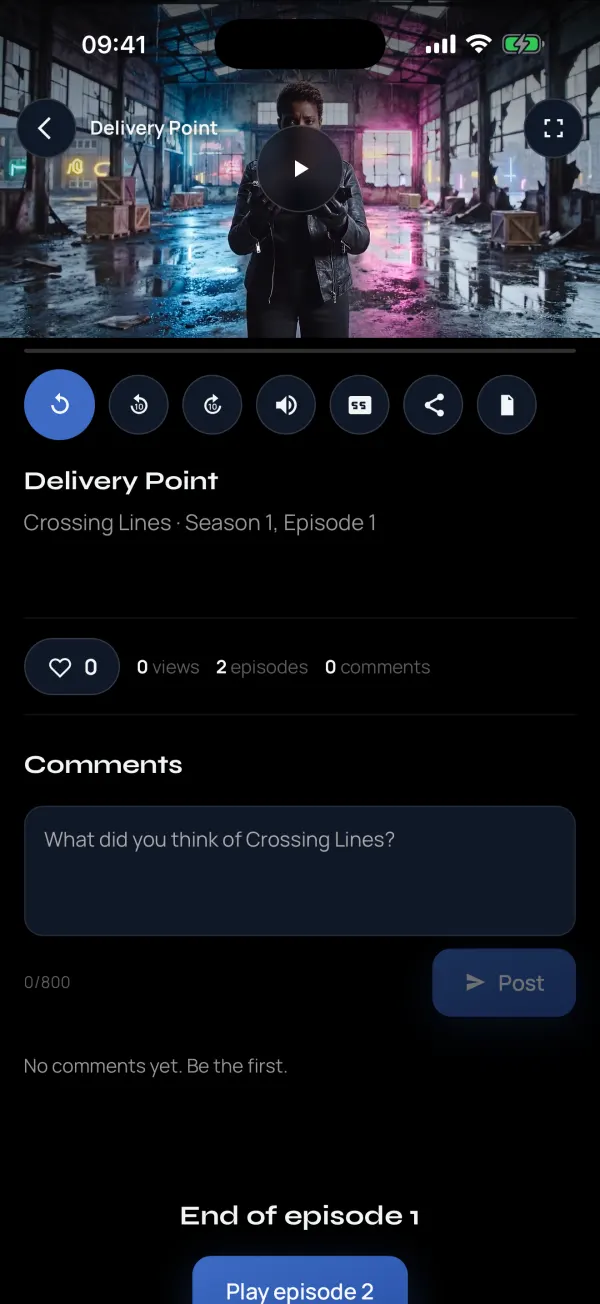
A storyboard in AISP is a playable sequence: one illustrated frame per scene, with the script text on screen, timed to the scene length you set (up to 15 seconds per scene in Storyboard). It reads like an animatic without the motion, which is what a storyboard is for — checking order, coverage and pacing before anyone spends real money.
Because the characters are defined once with written appearances and reference portraits, the same person looks the same in frame 1 and frame 30. That is the part generic text-to-image tools get wrong when you prompt each panel separately.
Your script stays your script
When you write an episode yourself, the agent is instructed to keep your words and not add events. It decides where to cut the text into scenes and how to frame each shot, which you can read before confirming. Screenplay format (sluglines, names, dialogue) works, and so does plain prose describing what happens.
If the script introduces someone who is not in the cast yet, they are added with a portrait of their own so they stay consistent if they return.
Limits to know
- Frames are AI-generated illustrations, not technical boards: there are no camera arrows, panel numbers or shot-size labels.
- There is no PDF or image export; boards play in AISP and are shared by link.
- Attached images are not used as character references; written character notes are.
- A feature script needs to be split into episodes, at up to 12,000 characters each.
From storyboard to moving picture
Once the board works, switch the look before rendering the next episode: Motion adds a narrator voice and camera moves over the illustrations (2 credits per second), and the video tiers generate moving footage with their own dialogue and sound (from 11 credits per second for Draft).
Questions
Is there a free AI storyboard generator?
Scripting is free with the Standard writer, and new AISP accounts get 100 free credits, which is enough for a first Storyboard episode.
Can I storyboard a single scene?
Yes. An episode can be as short as 3 scenes, so a single sequence works well.
Product details checked November 2026. Rates and features can change; the app always shows the current cost before you confirm.