 AISP
AI story writer: how to write a full story with AI
Give the AI story writer a person, a place and a problem, let it plan the whole story first (characters, world rules, an outline), then have it write one part at a time while you read and redirect. Planning first is what stops AI stories from wandering. In AISP the plan — a series bible — is written free, and episode scripts are free with the Standard writer.
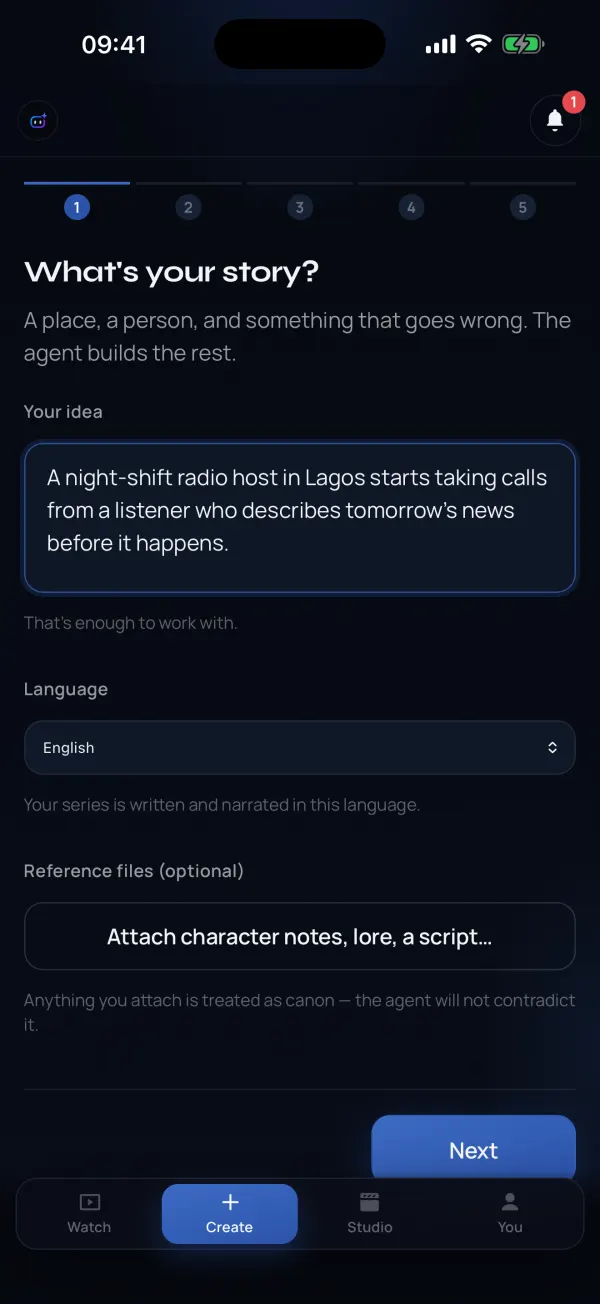
Step by step
- Write your idea in one or two sentences: who, where and what goes wrong.
- Choose the genre, tone and language, or let the AI suggest them.
- Have the AI write the plan first: title, characters with concrete looks, world rules and an outline.
- Read the plan and fix anything you don’t like before any scenes are written.
- Generate the story one part (or episode) at a time, reading each before the next.
- Rewrite or replace any part yourself; the AI keeps the rest consistent with it.
Why AI stories often fall apart, and the fix
Ask a chat assistant for “a story about a haunted lighthouse” and you will get a decent page. Ask it for ten more pages and the story starts to drift: names change, the rules of the world bend, the ending forgets the beginning. The model is writing one passage at a time without a plan to check against.
The fix is the same one human writers use. Decide the things that must not change — who the characters are, what they want, how the world works and where the story ends — and give that plan to the writer every time it writes the next part. A writers’ room calls this document a bible.
How the AI story writer in AISP works
AISP is built for stories told in parts. From your idea, the agent writes a series bible: a title and logline, the tone, world rules, a cast with written appearances and motives, and an outline of the season. Writing the bible costs nothing.
Each episode is then scripted into scenes — who is there, where it is, what happens and the lines people say. Continuity notes carry what happened forward, so episode 4 remembers episode 1. You can read every script, ask for a rewrite, or write an episode yourself (up to 12,000 characters) and the agent keeps your words.
Free and paid writers
- Standard: solid structure and pacing. Free for every script.
- Sharp: tighter plotting and more natural dialogue. 10 credits per script.
- Best: the strongest writer, with character voice, subtext and real endings. 15 credits per script, and the default on the Create screen.
A practical approach: draft the whole season with Standard, then re-script the parts you care most about with Best. New accounts get 100 free credits.
From story to screen
Most AI story writers stop at text. In AISP the same story can be turned into episodes you can watch: a storyboard with one illustrated frame per scene, a narrated motion comic, or video with generated dialogue and sound, with the same characters in every scene. That part uses credits, and each episode is priced before you confirm.
What to type for a better story
- A specific person: “a disgraced chef” beats “a woman”.
- A concrete problem with a deadline: “has until dawn to…”.
- One unusual detail only your story has.
- Anything that must stay true, as attached notes: a backstory, a world rule, a scene you already wrote.
Questions
Can AI write a story for me?
Yes. Give it an idea and it can write the plan, the scenes and the dialogue. The results are best when you read each part and steer it, the way an editor would.
Is there a free AI story writer?
In AISP, the series bible is always free and episode scripts are free with the Standard writer. You only spend credits on sharper writers, pictures and rendered episodes.
Is it an AI story writer with no filter?
No. AISP follows a content policy suitable for teens and up: dark horror and thrillers are fine, but sexually explicit material, hate speech and lingering gore are not.
Who owns a story written with AISP?
You keep ownership of the content you submit. AISP has a limited licence to host and process it to run the service.
Which is the best AI for writing stories?
It depends on what you are writing. General chat assistants are good for short prose; tools that keep a plan and a cast, like AISP, are better for long or serialised stories, especially if you want to turn them into episodes.
Product details checked November 2026. Rates and features can change; the app always shows the current cost before you confirm.