 AISP
AI novel generator: how to plan and draft a novel with AI
An AI novel generator works best in two stages: first a plan — characters, world rules and a chapter-by-chapter outline — then drafting one chapter at a time against that plan. AISP writes the plan for free from one sentence and scripts each part scene by scene; it does not write long prose chapters or export a manuscript, so for prose you draft from its plan.
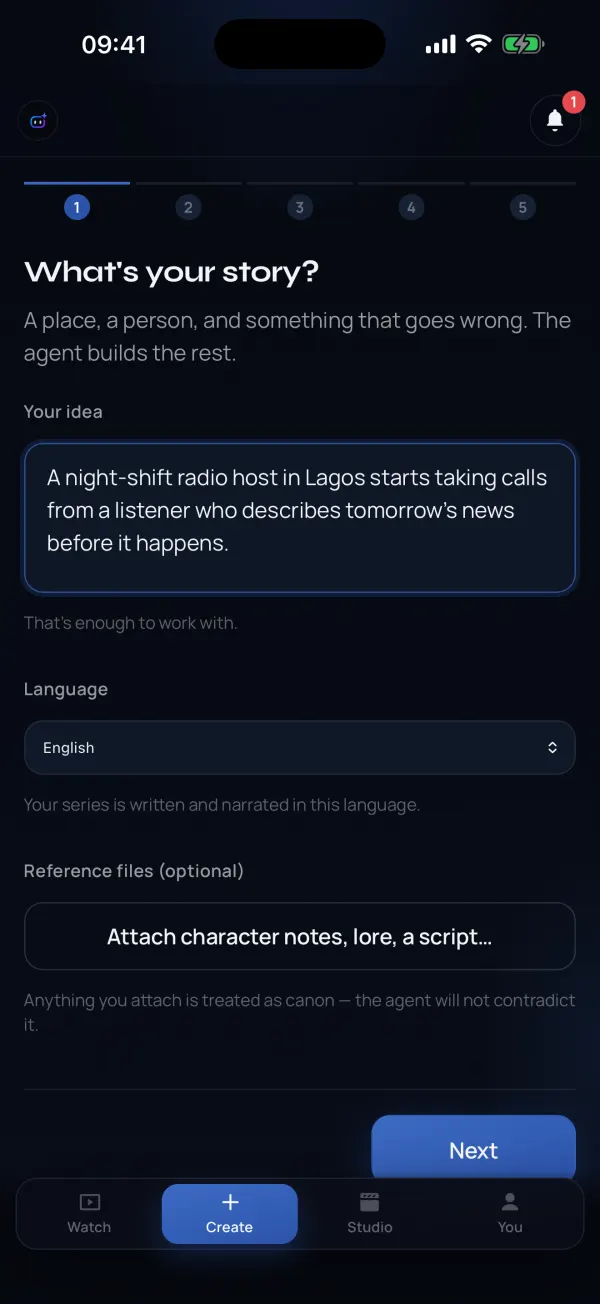
Step by step
- Write the premise in one sentence: a person, what they want and what stands in the way.
- Generate the plan: cast with appearances and motives, world rules, and an outline of the parts.
- Edit the plan until you would happily read that book.
- Draft one chapter at a time, giving the AI the plan and a summary of earlier chapters each time.
- Keep a running list of facts that must not change, and check every chapter against it.
- Revise by hand: voice, pacing and the ending are where your judgement matters most.
Can AI write a novel?
It can draft one, but not well in a single go. Language models write fluent passages, yet over a hundred thousand words they lose track of names, timelines and promises made in chapter one. The novels that come out of AI tools in one shot tend to wander and end abruptly.
What works is the way human novelists already work: a plan first, then chapters written against it, with notes carried forward. The AI does the drafting; you do the steering.
A novel outline template
- Premise: one sentence with the protagonist, their goal and the obstacle.
- Cast: for each main character, age, look, what they want, what they fear and how they talk.
- World rules: what is true here that is not true in ours, and the limits of it.
- Act one (about a quarter): the normal world, the inciting incident, the decision to act.
- Act two (about half): rising trouble, a midpoint that changes the goal, the darkest moment.
- Act three (the last quarter): the climax and what has changed.
- Chapter list: one line per chapter saying what happens and what changes.
- Continuity notes: facts later chapters must respect.
What AISP does for a novel
AISP is built for serialised stories, which makes it a strong planning tool. From one sentence its agent writes a series bible — title and logline, tone, world rules, a cast with concrete appearances and motives, and an outline of 3 to 12 parts. Writing the bible is free.
Each part can then be scripted into scenes: who is there, where it is, what happens and what people say. Scripts are free with the Standard writer, or 10 or 15 credits with the Sharp and Best writers. You can also see the story: render a part as a storyboard, a narrated motion comic or video with the same characters throughout.
What AISP does not do
- It does not write long prose chapters: its scripts are scene breakdowns with action and dialogue.
- It does not export a manuscript, PDF or ebook.
- It is not “no filter”: content follows a teen-and-up policy.
A practical workflow: generate and refine the plan in AISP, then draft prose chapters in your own editor or a general writing assistant, using the bible and the scene list as the brief for each chapter.
Questions
Is there a free AI novel generator?
Planning in AISP is free: the series bible with cast, world rules and outline costs nothing, and scene scripts are free with the Standard writer.
Can I sell a novel written with AI?
Check the platform’s rules first. Amazon KDP, for example, asks authors to disclose AI-generated content when they publish. You keep ownership of what you submit to AISP.
How long can the story be in AISP?
A season has 3 to 12 parts, and each part 3 to 60 scenes. For a longer novel, plan it as more than one season.
Can I give the AI my own plot or characters?
Yes. Attach notes — characters, lore, a synopsis or chapters you have written — when you create the series; AISP treats them as canon and will not contradict them.
Product details checked November 2026. Rates and features can change; the app always shows the current cost before you confirm.