 AISP
Villain ideas: 20 original villains, each with a motive and a method
A strong villain idea pairs a motive the audience can follow with a method only this person would use. Below are 20 original villain ideas sorted by what drives them, a list of ten villain motivations to mix in, and one villain built step by step: motive, method, fixed appearance and the one thing they will not do.
Villains who believe they are helping
- A ward volunteer coordinator in Porto who cannot bear an empty bed. Method: she quietly cancels patients’ transport home.
- A village schoolteacher convinced that talent rots in small towns. Method: she sabotages every local job offer her brightest pupils receive.
- A flood engineer who decides which district the river takes. Method: he redraws the maps so nobody learns there was a choice.
- A matchmaking aunt in Jaipur who trusts only her own pairings. Method: she ends happy couples with one well-timed truth each.
- A retreat founder who wants her guests to need nothing. Method: first she takes their phones, then their surnames.
Villains settling an old score
- A piano-competition runner-up, now head judge thirty years on. Method: he marks down every pupil of the woman who beat him.
- The last resident of a demolished street. Method: she buys up the personal debts of each councillor who voted for it.
- An uncredited ghostwriter of powerful people’s memoirs. Method: he plants one provable lie in every book and waits.
- A sacked stadium groundsman who knows where every pipe runs. Method: the pitch floods only on the nights that cost the owner most.
Villains who want order
- The chair of a residents’ committee in a desert suburb. Method: water is rationed by obedience, recorded in a ledger of favours.
- A purser on a long river cruise who thinks passengers behave better when frightened. Method: he invents a thief.
- A queen raised by archivists who distrusts anything unwritten. Method: songs are seized at the border like contraband.
- A colony quartermaster who has promised zero waste. Method: she starts listing people under inventory.
Villains who want to be needed or admired
- A young heir in Lagos who wants her father’s shipping firm. Method: she solves crises in front of the board that she paid to cause.
- A fortune-teller in Marseille who cannot stand being wrong. Method: she arranges the accidents she predicts.
- A lifeboat coxswain who misses being a hero. Method: he sends small boats a false all-clear, then goes out to save them.
- A prize-winning beekeeper who wants the only honey in the valley. Method: he sells his neighbours cheap queens that never lay.
Small-scale villains for younger stories
- A playground swap-king who wants every marble in school. Method: he invents a new rule halfway through each game.
- A neighbour who wants silence. Method: every ball that crosses her fence goes into a labelled cabinet.
- A cat who wants the dog’s bed. Method: she frames him for each broken vase.
Villain motivations list
Each is a want an ordinary person might share, pushed too far.
- Fear of being forgotten.
- Love that has turned into ownership.
- A debt to someone worse.
- Certainty that only they can see the danger.
- Envy of somebody’s ordinary life.
- A promise made to the dead.
- Boredom with winning fairly.
- Shame over one old mistake.
- Loyalty to a place that is vanishing.
- The wish, just once, to be thanked.
What separates a villain from an obstacle
An obstacle is in the way; a villain makes choices. The motive must be something the hero could have wanted too. The method must come from the villain’s job or talent, which is why a groundsman floods a pitch and a ghostwriter plants a lie. And the villain must be winning for most of the story; the common mistake is one who explains a grand plan, then loses every scene.
Worked example: building the fortune-teller
- Motive: years ago one wrong prediction cost a family their savings, and the street laughed at her for a decade. She has sworn never to be wrong again.
- Method: she predicts small misfortunes for clients, such as a fall, a fire or a lost job, then pays a nephew to make them happen. Her reputation grows with every “accident”.
- Fixed appearance: 61, tall and stooped, cropped white hair, an amber ring on each thumb, a mustard cardigan with mended elbows.
- The one thing she will not do: make a prediction about a child. She turns those clients away without explanation.
That last line makes her beatable and human: the hero’s way in is a client who brings a child.
Putting your villain opposite a hero
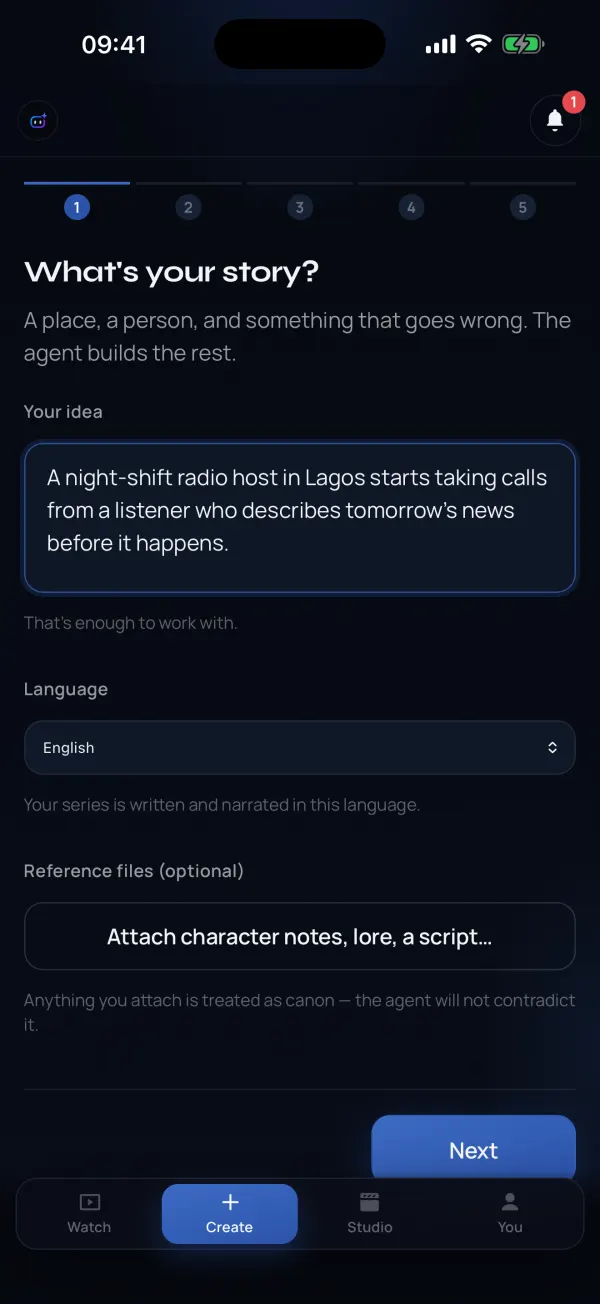
To test a villain, type the motive, method and the line they will not cross as your idea on AISP’s Create screen. The agent writes a free series bible with the whole cast and the world rules, and you can read each scripted episode before spending anything. New accounts get 100 free credits, enough for a first Storyboard episode, and the cost is shown before you confirm.
Questions
What makes a good villain?
A motive the audience understands, a method that fits who they are, real competence, and one limit they will not cross.
How do I choose villain ideas for a story I have already started?
Look at what your hero wants and give the villain the same want with fewer scruples, or the opposite want with a better argument. The villain should attack the hero’s weakest point.
Which villain motivations work best?
The ones a decent person could share: being needed, keeping a promise, protecting a home. Revenge and greed need one specific loss or prize.
Product details checked November 2026. Rates and features can change; the app always shows the current cost before you confirm.